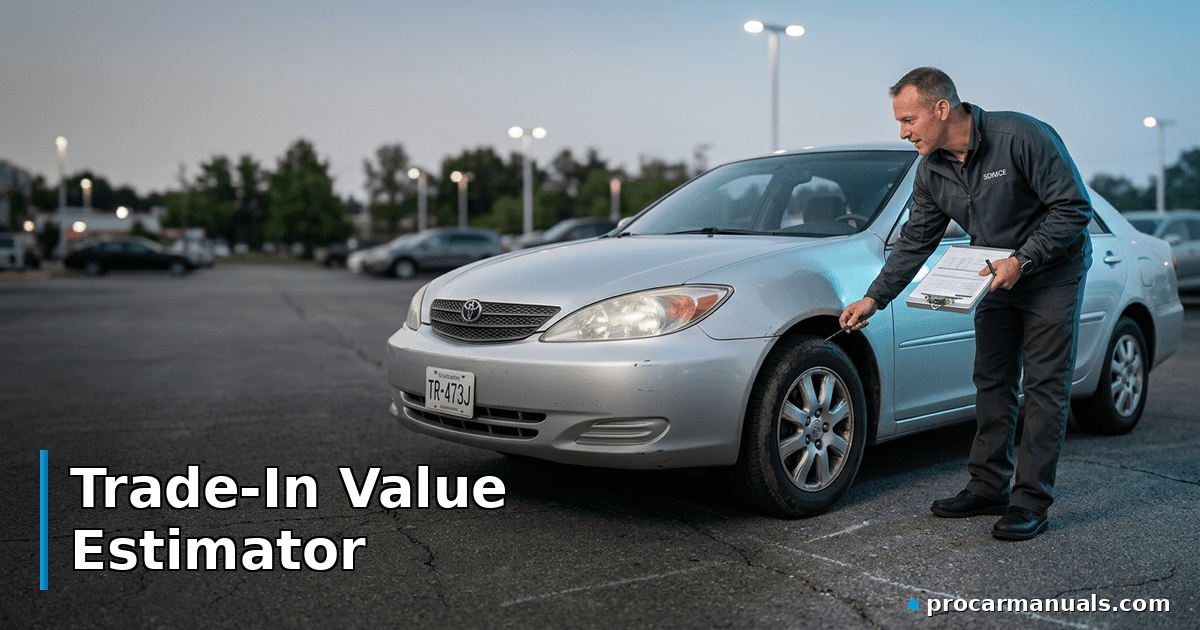
Trade-In Value Estimator
Estimate your car’s trade-in value at a dealer vs the higher private-party sale price. The gap is usually 15–25% — selling privately means more cash, but it requires effort and tax handling differs by state.
Trade-In Value Estimator
Heuristic trade-in, private-party and retail value estimates.
How It Works
Trade-in is what a dealer pays you for the car when buying another from them — they need margin to recondition and resell. Private-party is what an individual will pay you directly. Both are below dealer retail (what someone pays the dealer for the same car). KBB, NADA, and Edmunds publish all three values.
How to Use This Calculator
- Find your car’s wholesale value at KBB.com or NADAguides.com.
- Enter year, make, model, trim, mileage, condition, and options.
- The calculator returns estimated trade-in and private-party values.
- For dealer trade-in: get 3 separate offers (CarMax, Carvana, your selling dealer) — usually within $1 500 of each other; take the highest.
Worked Example
Reference Table
KBB condition multipliers applied to base trade-in value. Most cars fall in the “Good” tier — be honest, dealers will inspect and adjust.
| Condition | Trade-in multiplier | Description |
|---|---|---|
| Outstanding | 1.05× | Like new, no flaws, full service records — rare |
| Excellent | 1.00× | Looks new, no mechanical issues, minor cosmetic flaws |
| Good | 0.92× | Normal wear and tear, minor scratches, fully functional |
| Fair | 0.80× | Visible wear, needs minor repairs, some cosmetic damage |
| Rough/Poor | 0.65× | Significant body or mechanical issues — typically not taken on trade |
Frequently Asked Questions
Should I sell my car privately or trade it in?
Trade-in is faster (1 hour) and gives sales-tax savings in most states. Private sale gets 15–25% more but takes 2–4 weeks and effort (photos, listings, test drives, negotiation, paperwork).
Do dealers really pay sales tax on the trade-in difference?
In 42 US states yes — you only pay sales tax on the difference between the new car price and your trade-in value. On a $30k new car with a $12k trade, you save ~$720 in sales tax (6% rate). California, Hawaii, and a few others tax the full price.
How do I get the highest trade-in offer?
Get 3 offers (CarMax instant offer, Carvana, your selling dealer). Don’t mention the trade until you’ve negotiated the new-car price. Some dealers inflate the trade and the new-car price equally — match them.
Should I clean and detail my car before trade-in?
A $150 detail can add $500–1 000 to your trade value. Skip if you have less than 12 hours before the trade; dealers know wholesale value and won’t pay extra for a perfectly clean car.
What if I owe more than the trade-in value?
This is “negative equity.” The dealer rolls it into the new loan, which puts you upside down on the new car too. Better path: drive the current car until it’s above water, then trade.