Insurance Savings Calculator
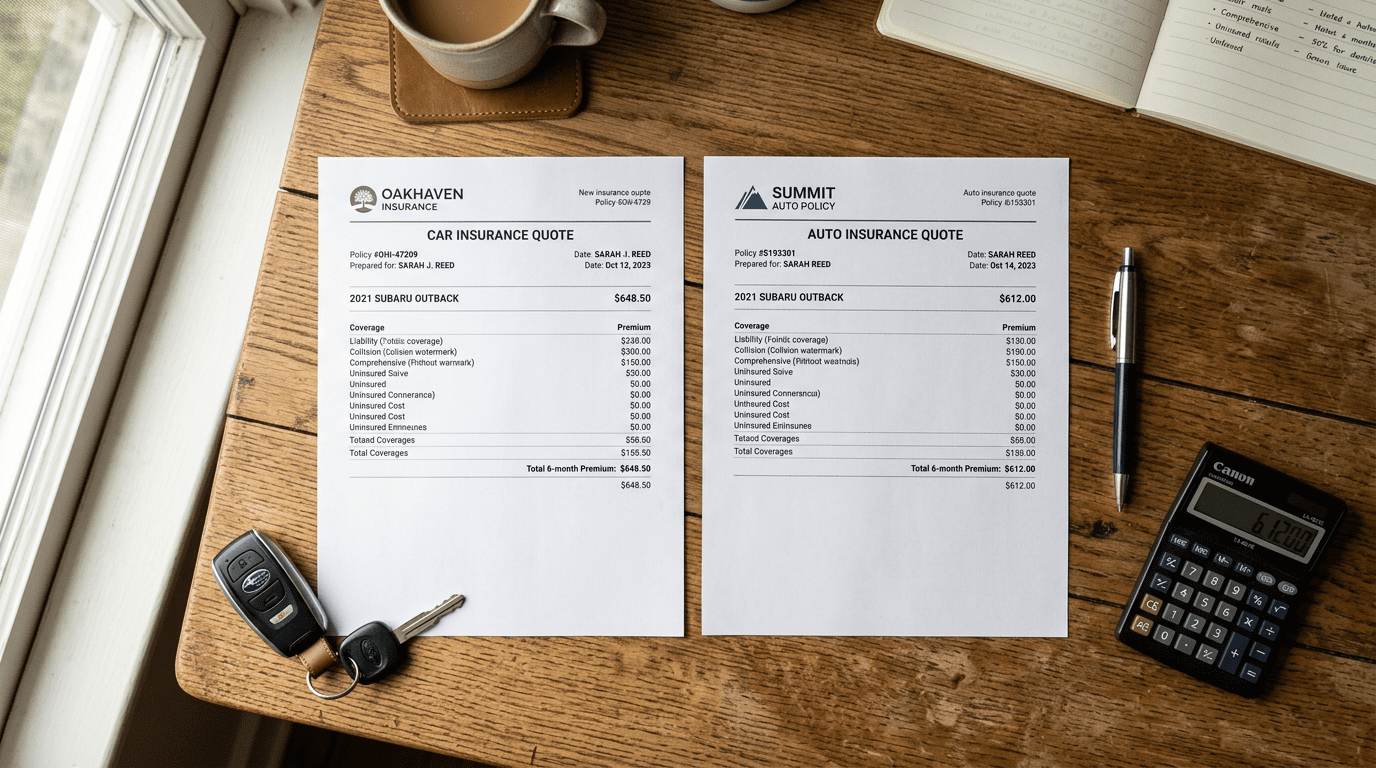
Compare two insurance quotes — see your annual saving, monthly difference, and total savings over your planning period.
Insurance Quote Comparator
Two quotes → annual & lifetime saving
How It Works
The comparison subtracts the two annual premiums and multiplies by the comparison period. The monthly saving is the annual difference divided by 12.
How to Use This Calculator
- Enter your current insurer's annual premium as Quote 1.
- Enter the competing quote or renewal price as Quote 2.
- Enter the number of years to compare over (typically 3–5 years).
- Click Calculate — the saving in annual, monthly, and total terms appears.
- Factor in any coverage differences before switching — a cheaper policy may cover less.
Worked Example
Reference Table
| Annual Premium | Monthly Cost | 5-Year Total | 10-Year Total |
|---|---|---|---|
| $800 | $66.67 | $4,000 | $8,000 |
| $1,200 | $100.00 | $6,000 | $12,000 |
| $1,600 | $133.33 | $8,000 | $16,000 |
| $2,000 | $166.67 | $10,000 | $20,000 |
| $2,500 | $208.33 | $12,500 | $25,000 |
Frequently Asked Questions
Should I always choose the cheapest insurance quote?
Not necessarily. Compare coverage limits (liability, comprehensive, collision), deductibles, claims process reputation, and exclusions. A policy $200 cheaper with a higher deductible may cost more if you make a claim.
How often should I shop insurance quotes?
At every renewal — typically annually. Insurance companies often give new customer discounts. Long-term customers who don't shop around frequently pay more. A 15-minute comparison can easily save $200–600 per year.
Does switching insurers affect my no-claims bonus?
In most countries, no-claims history is portable — you can transfer documented no-claims years to a new insurer. Request a no-claims proof letter from your current insurer before switching.
Are multi-policy discounts worth bundling home and car insurance?
Multi-policy discounts of 5–15% are common, but are only valuable if the bundled price is still competitive against separate policies. Compare both bundled and separate options to confirm bundling is actually cheaper.