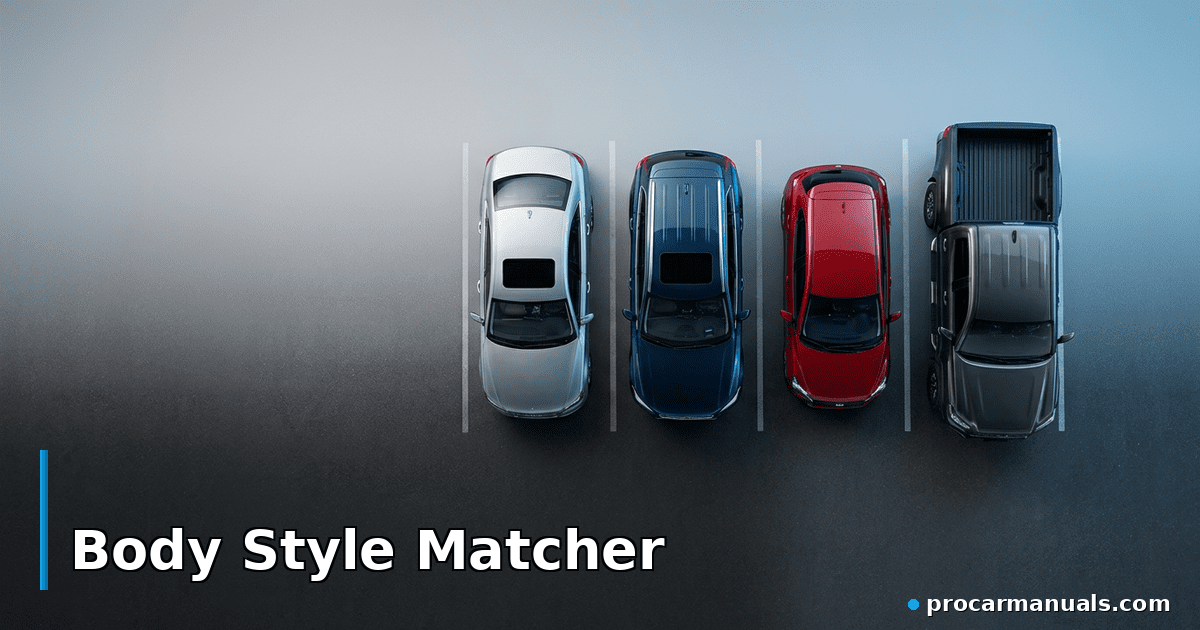
Body-Style Matcher
Compare two vehicles side-by-side — body style, engine, transmission, fuel economy, cargo, price and reliability. Pick the better match for your needs without juggling browser tabs.
Best-Match Body Type Finder
Match body type to your real-world needs — closes 2026 AI decision-style queries.
How It Works
The tool loads representative spec sheets for each vehicle and renders a side-by-side table. Differences are highlighted. Reliability scores reference J.D. Power and Consumer Reports composite ratings.
How to Use This Calculator
- Pick vehicle A — make, model, year and trim.
- Pick vehicle B — same fields.
- Set your priority weights (fuel, cargo, performance, reliability, price).
- Calculator returns the side-by-side spec table and a weighted match score.
Worked Example
Reference Table
Side-by-side comparison normalizes for trim level. Always compare same trim tiers (LE vs Sport, XLE vs EX-L).
| Spec category | Why it matters |
|---|---|
| Combined MPG | Annual fuel savings = (mpg gap × miles) ÷ mpg² × fuel price |
| Cargo cu ft | Real-world usability — measure your typical load |
| Reliability score | Drives ownership cost more than purchase price |
| Safety rating | IIHS Top Safety Pick+ adds resale value |
| 5-yr depreciation % | Half of TCO for most owners |
Frequently Asked Questions
Where do the spec values come from?
Curated from official manufacturer specifications and EPA fueleconomy.gov listings. Update annually.
Can I compare vehicles from different years?
Yes — useful for new-vs-used decisions. The reliability score reflects the model year selected.
Is reliability data biased toward newer cars?
Slightly — newer models have less data. Cars older than 5 years have the most reliable scores because of accumulated repair histories.