Wiper Blade Size Guide
Understand wiper blade sizing and verify your driver and passenger blade lengths are in the correct typical range for your vehicle.
Wiper Blade Size Helper
Length in mm or inches → fitment check
How It Works
Wiper blades are sized by their wiping arc length. Driver-side blades are almost always longer than passenger-side. Most vehicles need different lengths on each side — always check both.
How to Use This Calculator
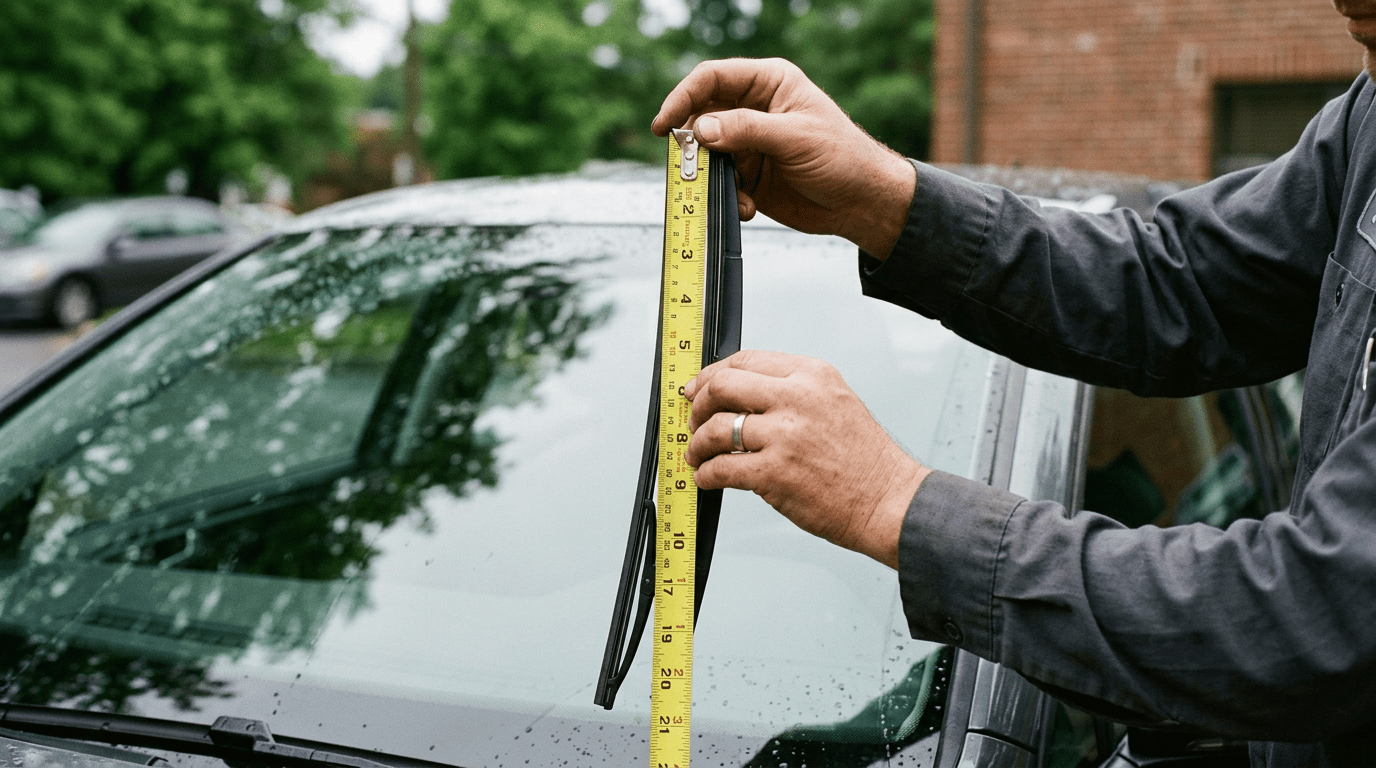
- Remove one wiper blade and measure it, or check your owner's manual.
- Enter the driver-side length in mm or inches.
- Enter the passenger-side length.
- Click Check — the sizes are validated against typical ranges.
- Use a fitment guide at an auto parts store (by make/model) for exact replacement.
Worked Example
Reference Table
| Vehicle Category | Driver Typical | Passenger Typical | Notes |
|---|---|---|---|
| Compact car | 550–600mm | 400–450mm | 24–26 in driver |
| Sedan | 600–650mm | 450–480mm | |
| SUV/crossover | 650–700mm | 450–500mm | Some have rear wiper |
| Pickup truck | 600–650mm | 400–450mm | |
| Minivan | 600–700mm | 400–500mm | Often asymmetric sizes |
Frequently Asked Questions
Why are driver and passenger wiper blades different lengths?
The wipers sweep overlapping arcs to maximize windscreen coverage without colliding. The driver's side is longer because it needs to clear a larger arc area directly in the driver's sightline.
How often should I replace wiper blades?
Every 6–12 months, or when they streak, skip, or chatter. Rubber degrades from UV exposure and ozone. In regions with snow and ice, winter blades (with rubber boots) can replace standard blades for the cold season.
What are the different wiper blade hook types?
J-hook (most common in the US/Canada), pin-type, bayonet, and side pin are the main types. Most aftermarket blades come with adapters. The hook type is independent of blade length — check the attachment type separately from size.
Can I use beam blades instead of conventional bracket blades?
Yes — beam (frameless) blades conform better to curved windscreens, perform better in snow/ice, and typically last longer. They cost 2–3× more but are a direct drop-in for most vehicles. They are the OEM choice on many newer vehicles.