Wheel Offset Calculator
Convert between ET offset, backspacing, and poke — check wheel fitment before buying new rims.
Wheel Offset Converter
ET ↔ Backspacing ↔ Poke
How It Works
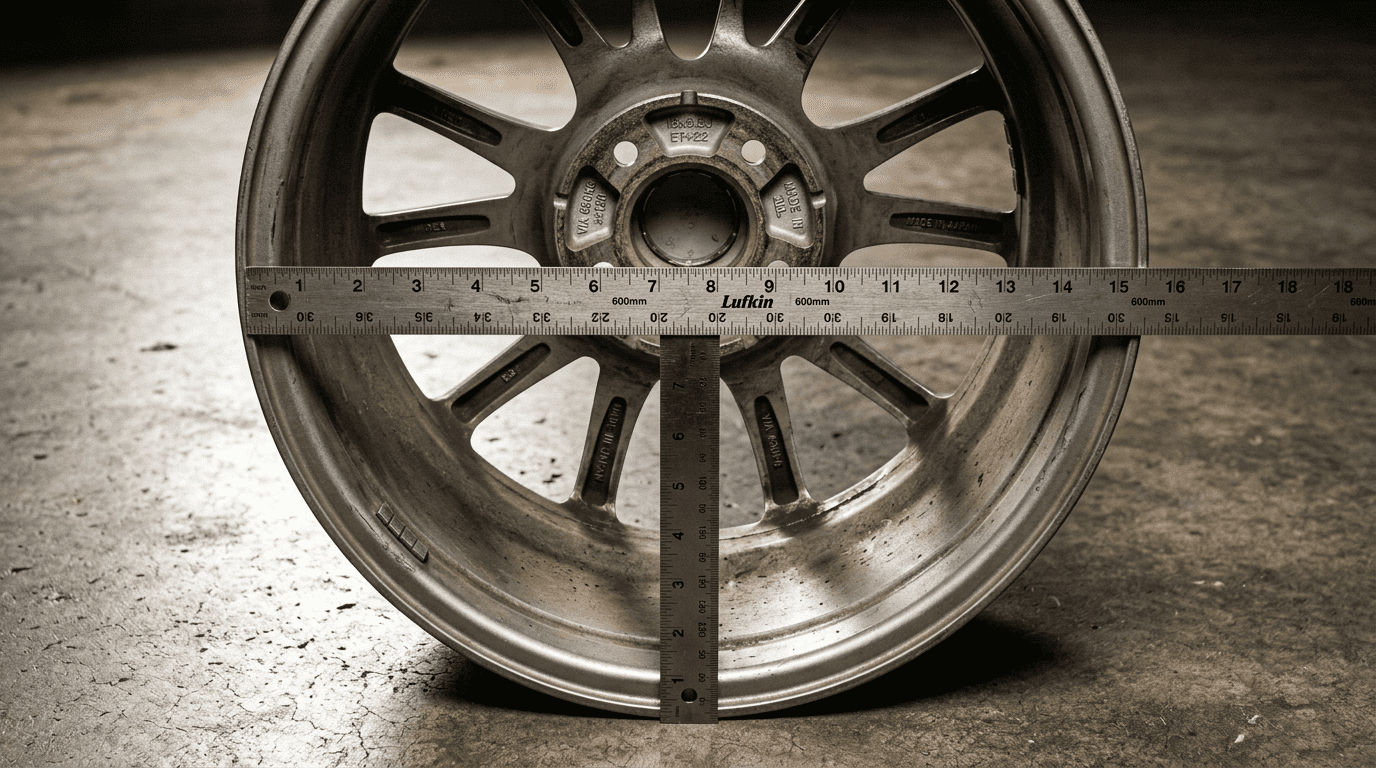
Wheel offset (ET) and backspacing are two ways to describe how far inward or outward the wheel sits relative to the hub face. High ET = wheels sit inward; low/negative ET = wheels poke outward.
How to Use This Calculator
- Enter the wheel width in inches (molded on the barrel or in the catalog).
- Enter either the ET offset (mm) or the backspacing (in) — the tool calculates the other.
- Click Convert to see the derived value and poke measurement.
- Check poke doesn’t exceed arch clearance — typically ≤ 10 mm flush.
- Verify with a fitment database for your specific vehicle.
Worked Example
Reference Table
| ET Range | Wheel Position | Typical Application |
|---|---|---|
| ET 50–65 | Very inset | Stock OEM wheels on most FWD cars |
| ET 35–50 | Moderately inset | Common aftermarket street |
| ET 20–35 | Moderate offset | Sport and flush fitment |
| ET 0–20 | Near flush | Wide-body or slight poke |
| ET negative | Poke / stance | Track/drift/show fitment, may rub |
Frequently Asked Questions
What happens if I use a wheel with an incorrect ET?
Too high ET (too inset) can cause inner barrel-to-suspension contact. Too low ET (too much poke) can cause tyre-to-arch rubbing and affect steering geometry. Always check minimum and maximum ET for your specific vehicle.
What is the difference between ET and backspacing?
ET (Einpresstiefe, German for ‘insertion depth’) measures from wheel center to hub face in mm. Backspacing measures from the inside barrel lip to the hub face in inches. Both measure the same geometry from different reference points.
How does a wheel spacer affect effective offset?
A 20 mm spacer effectively reduces ET by 20 mm (more poke). A 20 mm spacer on an ET35 wheel makes it behave like ET15. Spacers also move the wheel load outward, increasing hub bearing stress.
Can I use any brand’s wheel with the right offset and PCD?
Check: PCD (bolt pattern) must match, center bore must be equal or larger (use hub-centric rings), load rating must meet vehicle requirements, and ET must be within the vehicle’s specified range.