Torque Converter
Convert torque between Newton-metres, pound-feet, and kilogram-metres instantly — essential for tightening to spec.
Torque Unit Converter
Nm ⇄ lb-ft ⇄ kg-m
How It Works
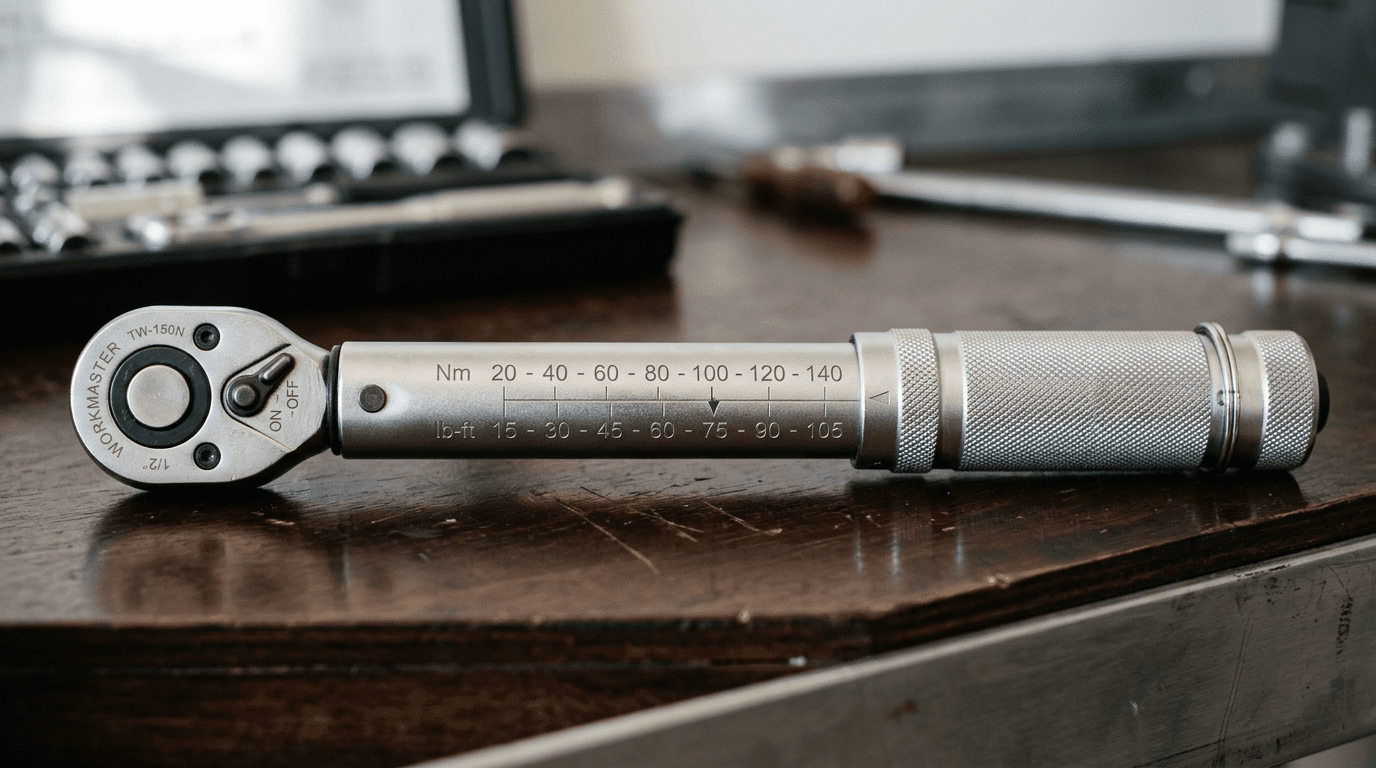
Torque is a rotational force. All three units measure the same physical quantity with different unit scales. 1 lb-ft = 1.35582 Nm = 0.13826 kg-m.
How to Use This Calculator
- Enter your torque value in any one of the three fields.
- Leave the other two fields blank.
- Click Convert — all three units appear instantly.
- Use the Nm value for European torque specs, lb-ft for US/UK specs.
- kg-m values appear in older Japanese and Italian workshop manuals.
Worked Example
Reference Table
| Torque Spec | Nm | lb-ft | Application |
|---|---|---|---|
| Engine oil drain plug | 25–35 | 18–26 | Standard thread |
| Wheel lug nuts | 80–120 | 59–89 | Passenger car |
| Cylinder head bolts | 100–150 | 74–111 | Varies by engine |
| Crankshaft pulley bolt | 150–250 | 111–184 | Most 4-cyl engines |
| Suspension control arm | 100–180 | 74–133 | Front suspension |
| Axle nut (hub) | 200–300 | 148–221 | Locked with cotter pin |
Frequently Asked Questions
Why are lb-ft used in the US and Nm used in Europe for the same spec?
Historical convention — the US retained Imperial units while Europe adopted SI (metric). Both measure the same physical quantity (force × distance), just in different unit systems. Torque wrenches are available in both scales.
What happens if I under-torque or over-torque a fastener?
Under-torquing leaves the joint loose — the fastener can back off, causing oil leaks, noise, or component failure. Over-torquing can strip threads, stretch or break the fastener, or distort the clamped component (e.g., warped brake rotors).
Is torque wrench accuracy important for home mechanics?
For critical fasteners (head bolts, wheel nuts, suspension), a calibrated torque wrench is essential. Quality click-type wrenches have ±4% accuracy. Cheap digital or beam wrenches may have ±8% or worse — verify calibration annually.
What is the difference between torque and tightening angle?
Torque-to-yield (TTY) head bolts and stretch bolts must be tightened to a specific angle after an initial torque value, not to a final torque figure. These bolts are designed to stretch into the elastic range for maximum clamping force.