Real-World MPG Estimator
Calculate true miles per gallon from your actual fill-ups. Trip computers are often optimistic — calculating MPG from odometer and gallons pumped gives the honest number.
MPG / MPGe Comparator
Cost-per-mile and 5-year energy comparison across two vehicles.
| Vehicle | Cost/mi | Annual energy | 5-year energy |
|---|
How It Works
Tank-to-tank MPG = miles driven between fills ÷ gallons added at the second fill. Always fill to the same click-off to keep the measurement consistent.
How to Use This Calculator
- Fill the tank completely and record odometer.
- Drive normally, then fill completely again.
- Enter the two odometer readings and gallons pumped.
- Calculator returns your real MPG and compares to EPA combined.
Worked Example
Reference Table
Hybrids show the biggest gap to EPA in cold weather (battery prefers warmth). Diesels often beat EPA highway.
| Driving style | Typical % of EPA combined |
|---|---|
| City stop-and-go in cold weather | 70–80% |
| Mixed daily driving | 90–100% |
| Highway 60–65 mph steady | 105–115% (often beats EPA) |
| Highway 75–80 mph | 85–95% |
| Mountainous terrain | 75–90% |
| Towing or roof cargo | 60–80% |
Frequently Asked Questions
Why does trip computer MPG read higher than real MPG?
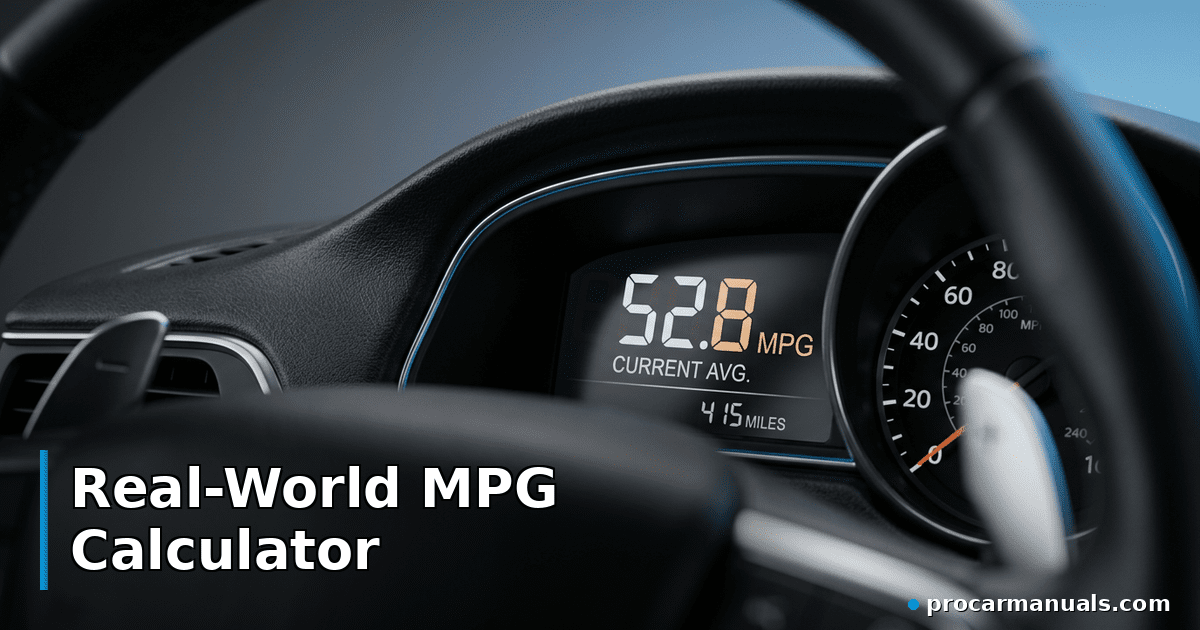
Trip computers estimate fuel burned from injector pulse width. Slight calibration drift and ignoring evaporation typically overstate MPG by 2–6%.
How many fill-ups do I need for an accurate average?
At least 5 — enough to wash out short-trip noise, cold starts, and pump variance.
Does premium gas improve MPG?
Only on engines that require it. On engines that recommend (not require) premium, MPG improves 1–3%, rarely enough to offset the price premium.