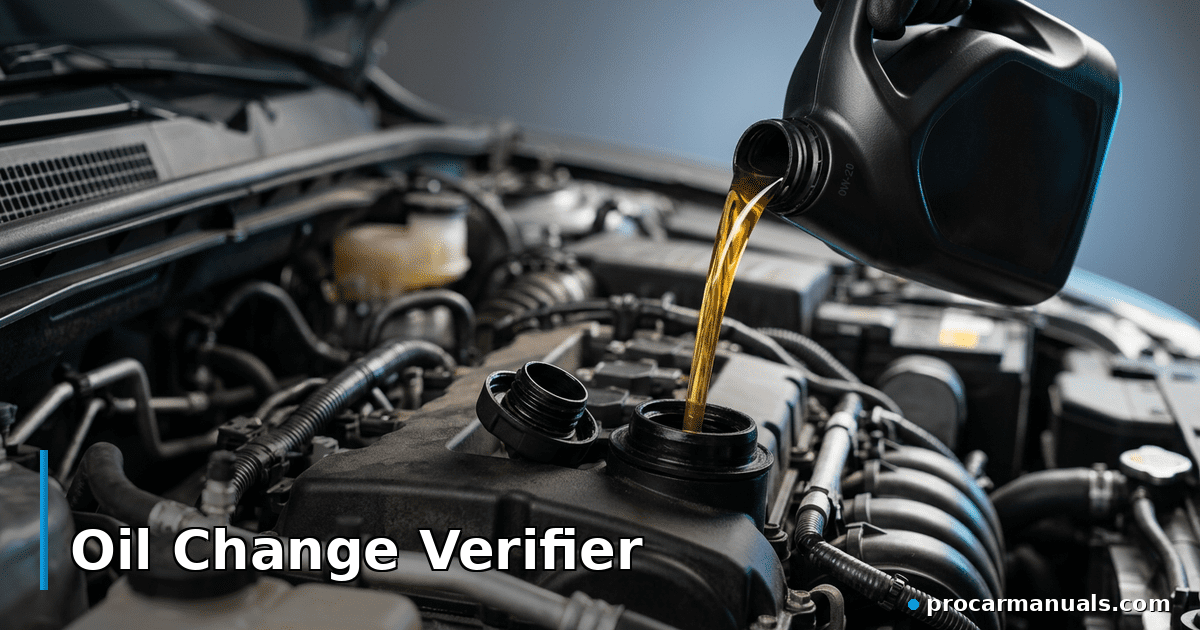
Oil Change Verifier
Verify that the oil change shop drained and refilled the correct amount of oil. Comparing drained volume to spec is the simplest way to catch leaks, over-filling, or short-filling — a frequent quick-lube shop error.
Oil Capacity & Viscosity Lookup
Estimate sump capacity and recommended viscosity grade for your engine layout.
How It Works
Engine oil capacity is fixed by design — typically 4–7 quarts for passenger cars. The drain plug removes about 85–95% of total oil; the rest stays in the engine and oil cooler galleries. Refill quantity should match the manual’s spec ±0.2 quart.
How to Use This Calculator
- Catch the drained oil in a measuring drain pan — most have quart and liter graduations.
- Let the engine drain for 15+ minutes for an accurate reading.
- Enter the drained volume and the manufacturer’s refill spec.
- The calculator flags over-fill, under-fill, or possible leak.
Worked Example
Reference Table
Always confirm capacity in your owner’s manual — turbocharged engines and dry-sump systems can vary substantially from these norms.
| Engine class | Typical capacity (with filter) | Expected drain |
|---|---|---|
| Small 1.0–1.6 L petrol | 3.5–4.5 quarts | 3.0–3.9 q |
| Midsize 1.8–2.5 L | 4.5–5.5 quarts | 3.8–4.7 q |
| Large 3.0–3.8 L V6 | 5.5–6.5 quarts | 4.7–5.5 q |
| V8 4.6–6.2 L | 6.5–8.5 quarts | 5.5–7.2 q |
| Diesel 2.0–3.0 L | 5.0–7.0 quarts | 4.3–6.0 q |
| Diesel 5.0–7.0 L | 12–18 quarts | 10–15 q |
Frequently Asked Questions
Why does drained oil quantity matter?
If you drain less than expected, oil is either leaking past a worn rear main seal, burning in the cylinders, or pooling somewhere in the engine. If you drain more than expected, the previous shop overfilled — which damages the catalytic converter and seals.
Is overfilling oil dangerous?
Yes. Excess oil aerates as the crankshaft churns it, causing foaming and reduced lubrication. Long-term overfilling damages seals and the catalyst.
How much oil should be left in the engine after draining?
About 0.3–0.8 quart for most passenger engines. This residual oil sits in the head, cooler, and turbocharger feed lines and doesn’t fully drain.
Should I run the engine before draining?
Yes — drain warm oil. Cold oil is thick and won’t drain completely. Run the engine 5 minutes, then let it sit 10 minutes so hot oil collects in the pan, then drain.
Why did my drained oil look like sludge?
Long intervals between changes, short trips that don’t reach operating temperature, or low-quality oil. Switch to a high-detergent synthetic and shorten the change interval temporarily — sludge will gradually clear.